Case Study – Council Tax, Planning Delays and Structural Issues

Niket Kapur • 20 March 2026


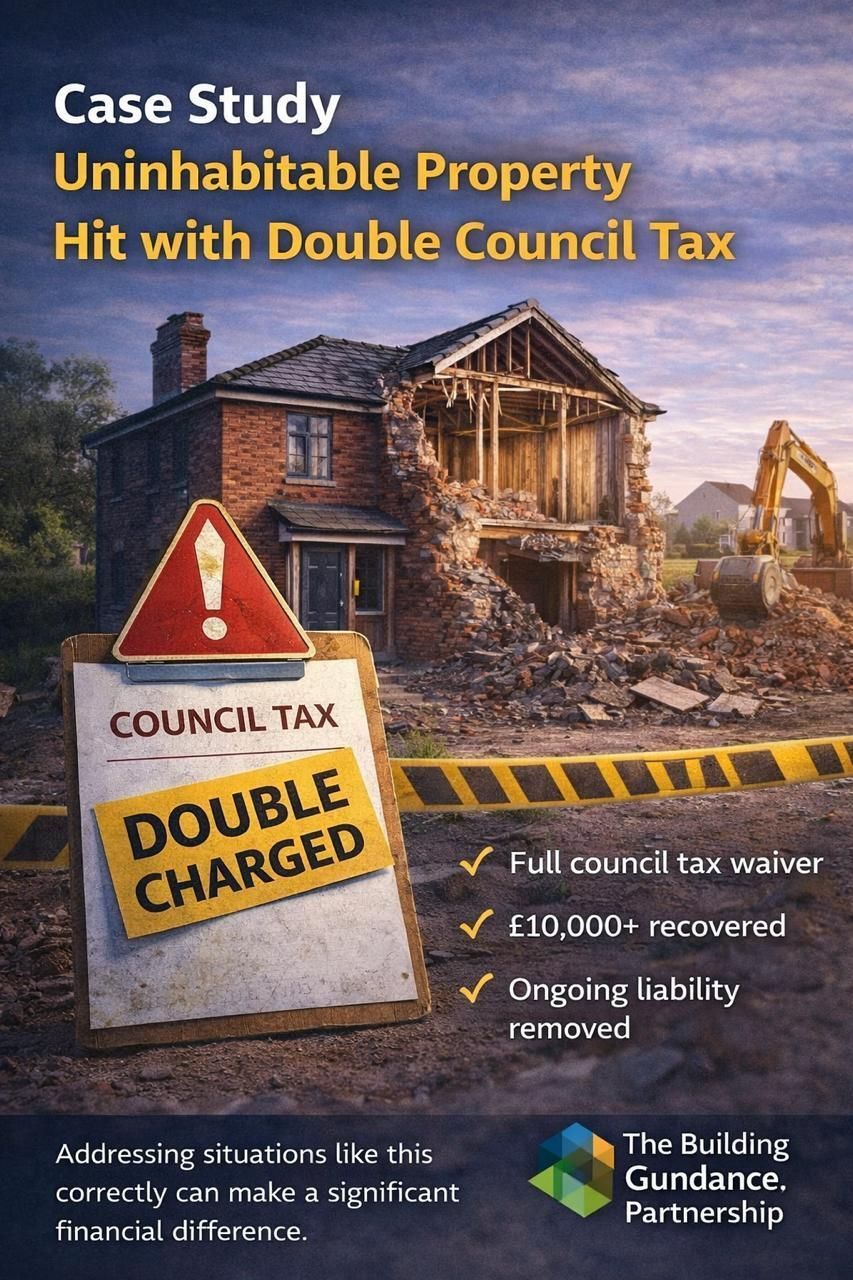
A homeowner commenced a significant renovation project with the intention of improving and extending their property.


The project did not proceed as expected.


There were delays with planning, and during the course of the works, structural issues emerged which required a reassessment of the build. Ultimately, a substantial part of the property had to be demolished mid-project.


At this stage, the property was clearly uninhabitable.


However, the local authority took a different view.


They imposed double council tax on the basis that the property was empty, applying the standard premium used to discourage long-term vacant properties.


Representations were made to explain the position.


These were rejected.


The authority maintained a rigid stance and would not accept that the condition of the property and the nature of the works justified relief.


The charges continued to accrue.


We were instructed to review the situation.


A detailed and structured approach was taken, including assembling the appropriate evidence, reframing the basis of the claim, and engaging with the local authority in a more targeted way.


The outcome was clear:


  • Full council tax waiver achieved


  • Over £10,000 recovered for the client


  • Ongoing liability removed


This is not an uncommon scenario.


Local authorities will often apply standard rules without properly considering the specific circumstances of a construction project. Initial refusals are frequent, but they are not always correct.


A properly prepared and presented case can materially change the outcome.


Situations like this arise regularly on construction projects.

Addressing them correctly can make a significant financial difference.


Sunil K Radia

The Building Guidance Partnership

Telephone (020) 8076 3110

WhatsApp +44 7507 705376

www.theBGP.co.uk 


by Niket Kapur 20 March 2026
Most homeowners focus on design, finishes and cost when undertaking a building project. Very few focus on compliance. That is where serious problems arise. This note sets out the key regulatory and risk areas that are frequently overlooked. These are not minor technicalities. They are issues that can expose you to financial loss, uninsured risk and legal liability. 1. Notifying Your Mortgage Lender If your property is subject to a mortgage, your lender has a legal charge over it. That property is their security. Most mortgage terms require you to notify the lender before carrying out structural works Some lenders require formal consent Failure to notify can place you in breach of your mortgage conditions This is often ignored. It should not be. 2. Insurance During Construction Standard household insurance is usually not valid during major renovation or structural works. Many policies specifically exclude properties under construction Continuing without appropriate cover can leave you completely exposed You should: Notify your existing insurer before works commence Arrange specialist renovation insurance where required Ensure cover includes fire, flood, theft, vandalism and public liability Do not assume you are covered. Check. 3. Contractor Insurance Is Not a Substitute Many homeowners assume the contractor’s insurance will protect them. That assumption is dangerous. You must verify: The level of cover is sufficient for the scale of the project The policy includes public liability, employer’s liability and contract works Cover extends to damage to neighbouring properties Liability includes injury to third parties, including trespassers Do not accept a certificate at face value. Review the detail. 4. VAT: Getting It Wrong Is Expensive VAT treatment in construction is complex but critical. New builds may qualify for 0 percent VAT Properties empty for two years or more may qualify for 5 percent VAT on renovation works Evidence of vacancy is essential and must be properly assembled Failure to structure this correctly can cost many thousands of pounds. 5. Council Tax on Uninhabitable Properties Where a property is genuinely uninhabitable, relief or exemption from council tax may be available. In practice: Applications are often rejected at first instance Local authorities do not always guide applicants through the correct route A structured and informed approach is required to secure the correct outcome We regularly assist clients in securing substantial savings, including backdated recoveries where appropriate. 6. Site Safety and Residual Liability Even when a contractor is in possession of the site, the homeowner can still carry risk. If someone is injured on site, including a passer-by or trespasser, liability may arise Simply appointing a contractor does not remove your exposure You should ensure: Proper site security is in place Risk assessments and method statements are being followed Insurance arrangements align with the actual risks on site This is not theoretical. Claims do arise in these circumstances. Final Thought These issues are rarely considered at the outset, yet they carry real consequences. Getting them right early avoids problems later. Contact us today so that we can review your arrangements.  Sunil K Radia The Building Guidance Partnership Telephone (020) 8076 3110 WhatsApp +44 7507 705376 www.theBGP.co.uk
by Niket Kapur 6 March 2026
Construction projects rely not only on skilled tradespeople but also on organisation and coordination. Even the most experienced builder benefits from clear planning and structured project management. Without systems to manage schedules, documentation and communication, projects can easily drift off course. Key Takeaways Plan thoroughly before construction begins. Ensure quotations and designs are clearly defined. Maintain strong coordination between all professionals involved. The value of structured planning Detailed programmes of work allow trades to be scheduled efficiently and ensure materials are available when required. Risks of poor coordination When schedules are unclear trades may arrive at the wrong time or wait for preceding tasks to be completed, which wastes time and increases costs. How project management improves outcomes Clear communication channels, documented decisions and regular progress reviews help keep construction aligned with the original objectives. About The Building Guidance Partnership The Building Guidance Partnership supports homeowners undertaking renovation, extension and refurbishment projects. By coordinating architects, engineers and builders we help reduce risk, control costs and keep construction programmes on track. Next Steps If you are planning a residential building project and want independent guidance to help avoid delays, cost overruns and technical problems, The Building Guidance Partnership can assist in coordinating the process Sunil K Radia The Building Guidance Partnership Telephone (020) 8076 3110 WhatsApp +44 7507 705376 www.theBGP.co.uk
by Niket Kapur 6 March 2026
Two homes can appear identical yet feel very different to live in. Comfort is influenced not only by aesthetics but also by technical aspects of the building fabric. Insulation levels, airtightness and ventilation systems all contribute to temperature stability, energy efficiency and indoor air quality. Key Takeaways Plan thoroughly before construction begins. Ensure quotations and designs are clearly defined. Maintain strong coordination between all professionals involved. The importance of insulation Insulation slows the movement of heat through walls, floors and roofs. Well insulated homes remain warmer in winter and cooler in summer while requiring less energy for heating. Airtightness and ventilation Modern building standards encourage improved airtightness in order to reduce uncontrolled heat loss. However airtight buildings must also include proper ventilation to maintain healthy indoor air. Modern comfort solutions Technologies such as mechanical ventilation with heat recovery can supply fresh air while retaining warmth within the building, improving both comfort and efficiency. About The Building Guidance Partnership The Building Guidance Partnership supports homeowners undertaking renovation, extension and refurbishment projects. By coordinating architects, engineers and builders we help reduce risk, control costs and keep construction programmes on track.  Next Steps If you are planning a residential building project and want independent guidance to help avoid delays, cost overruns and technical problems, The Building Guidance Partnership can assist in coordinating the process. Sunil K Radia The Building Guidance Partnership Telephone (020) 8076 3110 WhatsApp +44 7507 705376 www.theBGP.co.uk