
Using PIR Sensors in the Home: Simple Lighting That Works for You
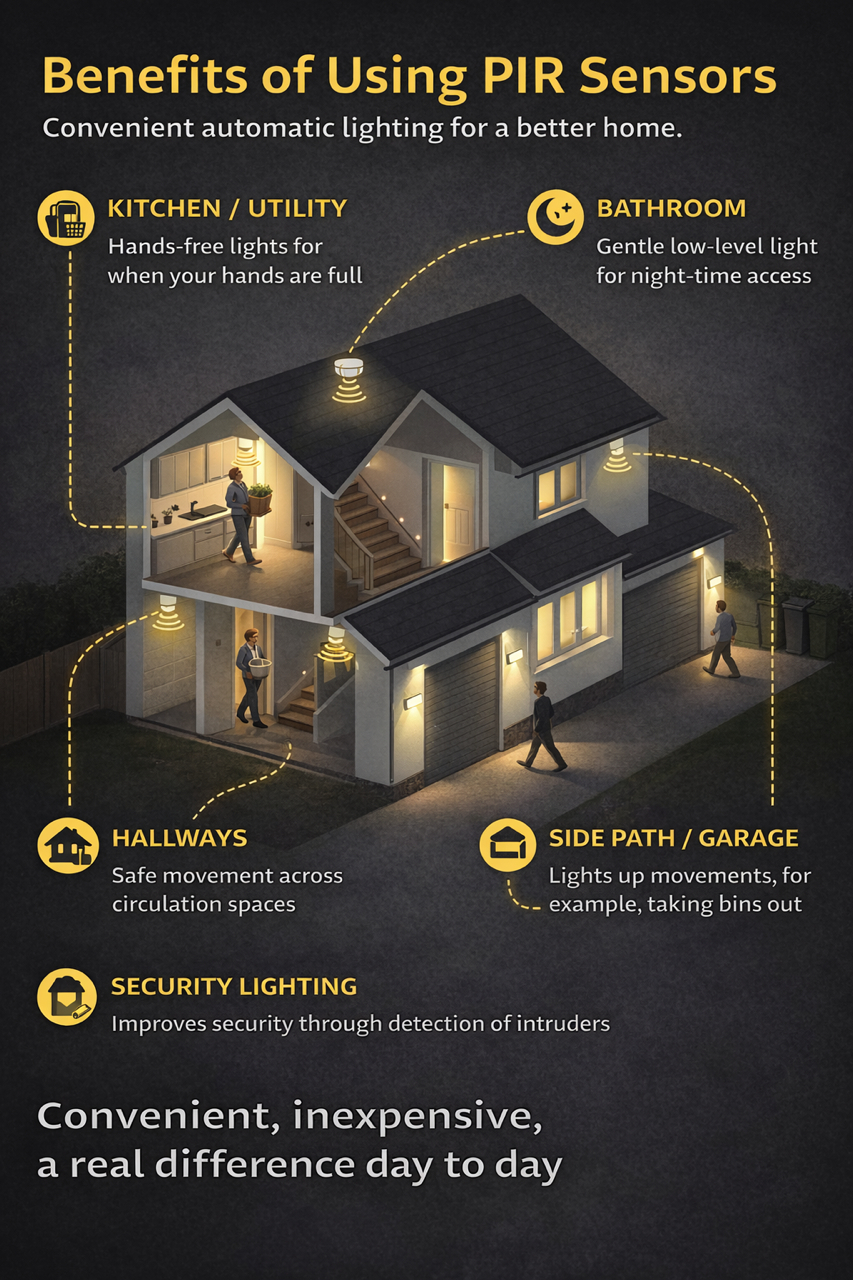
Not all good lighting requires complex systems. Some of the most effective improvements come from very simple measures. One of these is the use of PIR (passive infrared) sensors.
They detect movement and turn lights on automatically. Used properly, they can improve convenience, enhance safety, reduce energy use, and add a layer of security.
What Is a PIR Sensor?
A PIR sensor detects movement and changes in heat (body presence). When triggered, it turns lights on and switches them off after a set period. They can be used internally and externally.
Internal Use: Practical, Everyday Benefits
Hands-Free Lighting
· Ideal for kitchens, utility rooms and pantries
· Lights come on automatically when hands are full
Gentle Night-Time Lighting
· Bathrooms, hallways and landings
· Low-level lighting avoids disturbing sleep
· Improves safety at night
Circulation Spaces
· Corridors and staircases
· Improves safety and convenience
· Reduces need for multiple switches
External Use: Security and Guidance
Security Lighting
· Deters intruders
· Lights activate only when movement is detected
Guiding Movement Around the Home
· Paths, side access and bins
· Safe and convenient movement
· No need for manual switching
Design Considerations
· Correct positioning is critical
· Avoid unnecessary triggering
· Set appropriate sensitivity and timing
· Use comfortable light levels
Do Not Overcomplicate It
PIR sensors are inexpensive, easy to install and highly effective without complex systems.
Final Thought
Sometimes the simplest solutions make the biggest difference. PIR lighting is one of those.
Next Steps
If you are planning a renovation or upgrade, consider where automatic lighting would genuinely improve daily use and how it can be integrated simply and effectively.